You Got the Keys. Did You Get the Furnace’s Story?
Moving day is done. The boxes are (mostly) unpacked. Then the first cold night rolls in, you flip the thermostat to “heat,” and a thought hits you: When was this thing last serviced?
You have no idea, and neither does your agent. The seller left a garage door opener and a drawer of takeout menus, but no service records.
Sound familiar? You’re not alone. Most recent homebuyers inherit a furnace with no history at all. That’s frustrating, because you just spent a lot of money on this house. The last thing you want is a surprise repair bill or a cold night in January.
The good news is that you can figure out a lot about your furnace in about 15 minutes. This guide shows you how to read the clues your furnace leaves behind. It also covers what furnace maintenance should include, which red flags need a pro right away, and how to build a simple plan so you never have to wonder again.
Why Your Home Inspection Didn’t Answer This
Here’s what most buyers don’t realize: a home inspection is not a furnace tune-up.
Your inspector likely turned the heat on, checked that warm air came out, and looked at the unit from the outside. That’s useful. But inspectors usually don’t take the furnace apart. They don’t clean the flame sensor, test the gas pressure, or look closely at the heat exchanger. That’s not what they’re hired to do.
So a report that says “furnace operational” really means “it turned on that day.” It doesn’t tell you whether the furnace is running safely or efficiently. And it doesn’t tell you what the last owner skipped.
Play Detective: 4 Clues Hiding on Your Furnace
Before you call anyone, grab a flashlight. Your furnace has probably been leaving hints for years.
Clue 1: The Data Plate
Look for a metal or paper label inside the front panel door. It lists the brand, model number, and serial number. Many brands hide the build date inside the serial number. Search the brand name plus “serial number date” online, or snap a photo and send it to your HVAC tech. Knowing the age changes everything, because a 5-year-old furnace and a 22-year-old furnace need very different plans.
Clue 2: Old Service Stickers
Techs often leave a sticker or write the date right on the unit. Check the sides of the cabinet and the inside of the door. A row of dated stickers is a great sign. If there’s nothing at all, that doesn’t prove the furnace was neglected, but it’s a hint.
Clue 3: The Air Filter
Pull out the filter. Is it gray and caked with dust? Is it bent or sucked into the slot? A filthy filter usually means the last owner didn’t keep up with care. The filter also tells you the right size, which is printed on the edge. Write it down.
Clue 4: The Paper Trail
It’s not too late to ask. Email your agent and ask them to get the name of the seller’s HVAC company from the seller’s agent. A local company may still have records on file. Also check the utility closet and kitchen drawers, because warranty papers turn up in odd places.
What Your Clues Are Telling You
Now put the clues together. This table shows what you might find and what to do about it.
| What You Find | What It Likely Means | Your Next Step |
|---|---|---|
| Furnace under 10 years old, recent service stickers | Probably cared for | Schedule a routine tune-up before winter |
| Furnace under 10 years old, no records, dirty filter | Likely skipped maintenance | Replace the filter now and book a full checkup soon |
| Furnace 10–15 years old, no records | Middle-aged, with an unknown past | Get a full inspection, including the heat exchanger |
| Furnace 15+ years old, no records | Near the end of its usual life span | Get an inspection plus an honest repair-or-replace talk |
| Rust, soot, or scorch marks near the burners | Possible venting or combustion problem | Turn it off and call a pro today |
| Rotten egg smell or a CO alarm sounding | Safety emergency | Leave the house and call the gas company or 911 |
Most gas furnaces last around 15 to 20 years. Good care pushes yours toward the long end, and neglect pulls it toward the short end.
Red Flags That Can’t Wait Until Fall
Most furnace problems can wait for a scheduled visit. A few can’t.
If you smell rotten eggs, get everyone out and call your gas company from outside. If your carbon monoxide alarm goes off, do the same. Don’t try to find the problem yourself.
No CO alarm? Buy one this week. Put one on every level of the home and near the bedrooms. If you have a gas furnace with no service history, this is the cheapest peace of mind you’ll ever buy.
Other warning signs are less urgent but still worth a quick call. Watch for a yellow or flickering flame, since a healthy one is mostly blue. Listen for loud bangs or squeals when the furnace starts up. Notice if it clicks on and off every few minutes, or if the heat shuts off while the house is still cold.
Each of these points to a specific problem that a trained tech can find quickly. For breakdowns, RW offers furnace repair with same-day service when you call before 10 AM.
What Real Furnace Maintenance Should Cover
Not every “tune-up” is the same. Some are a quick look and a coupon. A real furnace maintenance visit is hands-on.
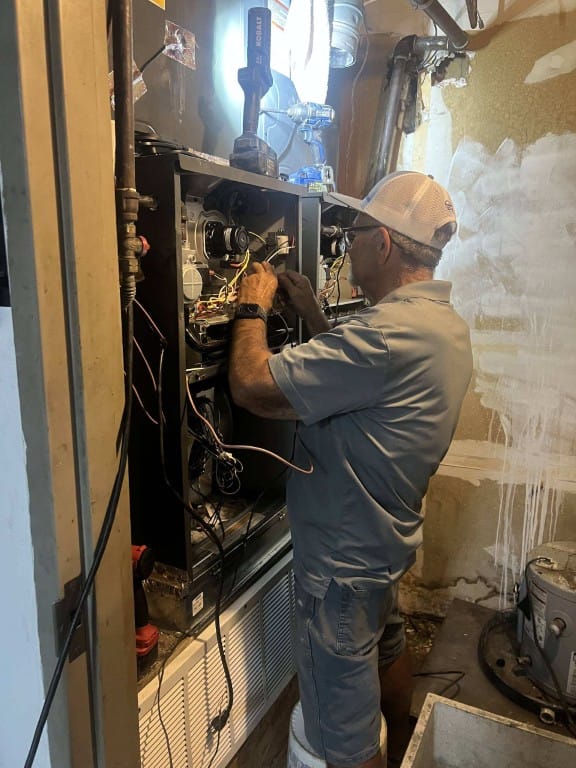
A thorough visit should include a carbon monoxide check and a gas leak check. The tech should inspect the burners and the heat exchanger for cracks or rust. They should also clean the flame sensor, a small rod that tells the furnace the burner has lit. A dirty flame sensor is one of the most common reasons a furnace starts, runs for a few seconds, and then quits. You can learn more about furnace flame sensor cleaning here.
The tech should also check the blower motor and belt, tighten electrical connections, test the thermostat, and make sure the exhaust vent is carrying fumes safely outside.
The First Visit Is Different
For new homebuyers, the first furnace maintenance visit is more than a tune-up. It sets a baseline.
Ask your tech to write down the furnace’s age, its overall condition, and anything to keep an eye on. That becomes the service record the last owner never gave you, and every later visit builds on it.
One more tip: ask the tech to spend two minutes walking you through the unit. Where’s the shutoff switch? Where’s the gas valve? Which filter should you buy? A good tech will be happy to show you, and you’ll feel much less helpless the next time something acts up.
The Mid-South Twist: Idle Summers
DeSoto County winters are shorter than winters up north. That sounds like a break for your furnace, and in some ways it is. But it also means the furnace sits unused for months during our long, hot summers.
Dust settles on the burners, and spiders and other critters move into the vents. Then the first chilly night arrives and everyone turns on the heat at once. That’s why a burning-dust smell is common the first time the heat runs each year. It should fade within an hour. If it doesn’t, or if it smells like hot plastic, shut the system off and call.
It’s also why fall is the best time for service. You catch problems before the cold-weather rush, not in the middle of it.
Can You Do Any of This Yourself?
Yes, some of it, and you should.
Change the air filter every one to three months. Keep the area around the furnace clear of boxes and paint cans. Make sure furniture isn’t blocking the vents. Test your CO alarms once a month.
The exception is anything inside the burner area or anything involving gas. Don’t take apart the burners, adjust the gas valve, or poke around the heat exchanger. A small mistake with gas or venting can put your family at risk, and it can void your warranty.
Stop Guessing: Make a Plan You’ll Actually Keep
After that first visit, the goal is simple: never again be the homeowner who doesn’t know their furnace’s history.
The easiest way to do that is a maintenance plan. With the RW Comfort Club, you get two HVAC visits a year (spring for cooling, fall for heating), each with a 21-point system check and safety inspection. Members also get priority scheduling and 10% off repairs. Plans start at $100 a year, and you can add plumbing and electrical coverage.
That last part matters for new buyers, because your furnace isn’t the only mystery in the house. The water heater and the electrical panel came with no history either. RW Heating, Air, Plumbing & Electrical holds all three trade licenses under one roof. So one visit can cover the furnace, the water heater, and an electrical safety check. One call. One crew. Done right.
And if the news is bad? If your furnace is old, cracked, or worn out, you’ll get a straight answer about whether to repair or replace it. When replacement makes sense, RW handles furnace installation and can walk you through financing and TVA EnergyRight rebates.
Frequently Asked Questions
How often does a furnace need maintenance?
Once a year, ideally in the fall before heavy use. A heat pump handles both heating and cooling, so it needs service twice a year. If your new-to-you furnace has no records, book the first visit as soon as you move in, whatever the season.
Is a home inspection the same as furnace maintenance?
No. An inspector checks that the furnace runs and looks for visible problems. A maintenance visit goes inside the unit to clean parts, test safety controls, and check for carbon monoxide and gas leaks. Think of the inspection as a quick look and the tune-up as the full exam.
How can I tell how old my furnace is?
Find the data plate inside the front panel. The build date is often coded into the serial number, and each brand uses its own format. Search the brand name plus “serial number date,” or send a photo to your HVAC company. They can usually decode it in seconds.
Is it worth maintaining an old furnace, or should I just replace it?
It depends on the furnace’s condition, not just its age. A well-kept 16-year-old furnace can still have years left, while a neglected 10-year-old one may not. A thorough inspection gives you the facts, so you don’t replace a good furnace too early or keep paying to fix one that’s failing.
From Mystery Box to Peace of Mind
Buying a home comes with a hundred unknowns. Your furnace doesn’t have to be one of them.
Start with the clues: the data plate, the stickers, the filter, and the paper trail. Put in CO alarms right away. Then book a full furnace maintenance visit that doubles as your baseline record. After that, a yearly plan keeps you ahead of problems instead of reacting to them.
You’ll feel the difference on the first cold night. No worrying, no guessing. Just heat.
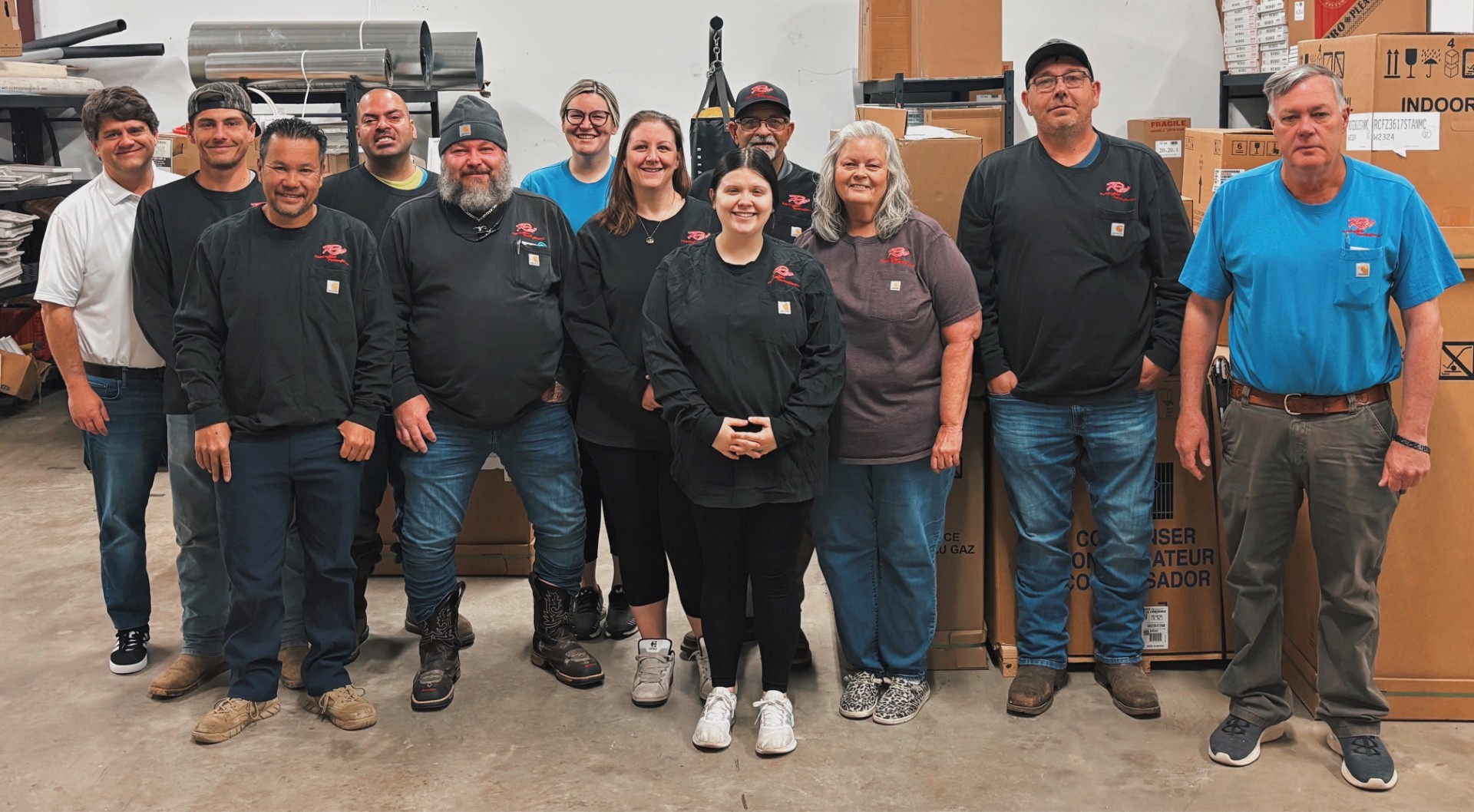
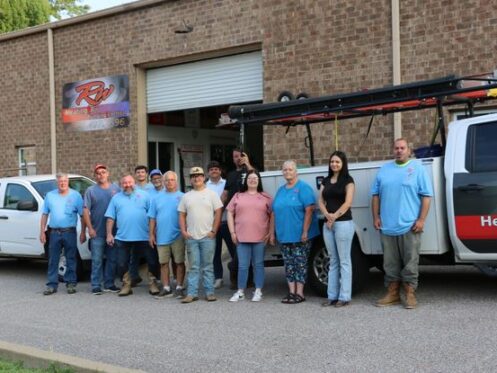
Ready to learn your furnace’s real story? The family-owned team at RW Heating, Air, Plumbing & Electrical has served DeSoto County homeowners from Nesbit since 1999. Schedule your furnace checkup online or call 662-429-2590. Call before 10 AM for same-day service. New to the area? Meet the team at RW Heating, Air, Plumbing & Electrical before your first visit.