Will Your Furnace Make It Through the First Cold Night?
It’s the first chilly night of the season. You nudge the thermostat up, wait, and listen for that familiar click and whoosh. Nothing happens. Or maybe it runs for a minute, then shuts off.
Sound familiar? If your furnace is more than 10 years old, you’ve probably felt that small knot of worry every fall. You aren’t being paranoid. The first cold snap is when a lot of older systems quit, because they’ve been sitting unused for six or seven months.
The good news? Most of those failures can be seen coming. In this guide, you’ll learn why furnaces fail when you need them most, what a real furnace maintenance visit covers, how to tell if your system is worth fixing, and what you can safely do yourself. 
Why Old Furnaces Love to Quit on Night One
Here’s the thing. Your furnace doesn’t “wear out” all at once. Small problems pile up quietly all summer. Then the first cold night asks the system to go from zero to full speed, and the weakest part gives out.
The Summer Sleep Problem
A furnace that sat idle since March collects dust on its burners, flame sensor, and blower. A thin coat of grime on the flame sensor is enough to make it misread the flame. When that happens, the furnace shuts the gas off as a safety step. You get a few seconds of heat, then nothing.
The hot surface igniter is another common culprit. These parts are brittle, like a thin piece of ceramic. Years of heating up and cooling down can leave hairline cracks. Frequently, the crack finally breaks through on that first hard start of the season.
The Humidity Twist Most Guides Miss
Living in DeSoto County adds a local wrinkle. High-efficiency furnaces (90% and up) make water as they run. That water drains through a small line, and in many homes it shares a path with the AC’s drain.
After a long, sticky Mississippi summer, algae and sludge can build up in that line. Come fall, the furnace tries to drain, the line is clogged, and a safety switch shuts everything down. Your furnace isn’t broken. It’s just protecting your house from a leak. But you’re still cold.
Parts That Simply Get Tired
Blower motors, capacitors, and belts all age. A motor that hums through spring may not have the strength to start on a 30-degree night. And the older the system, the more of these tired parts there are at once.
What Real Furnace Maintenance Actually Covers
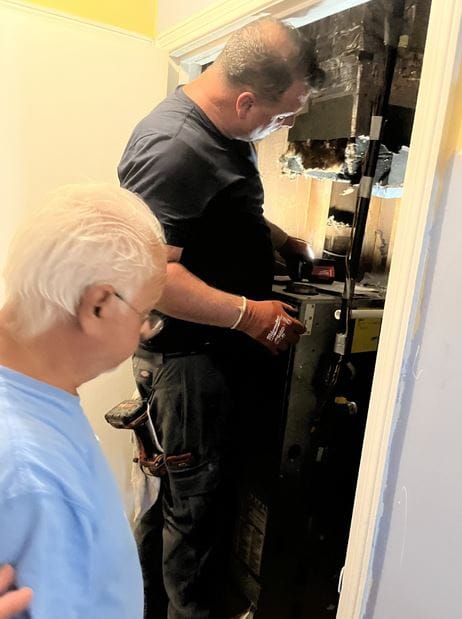
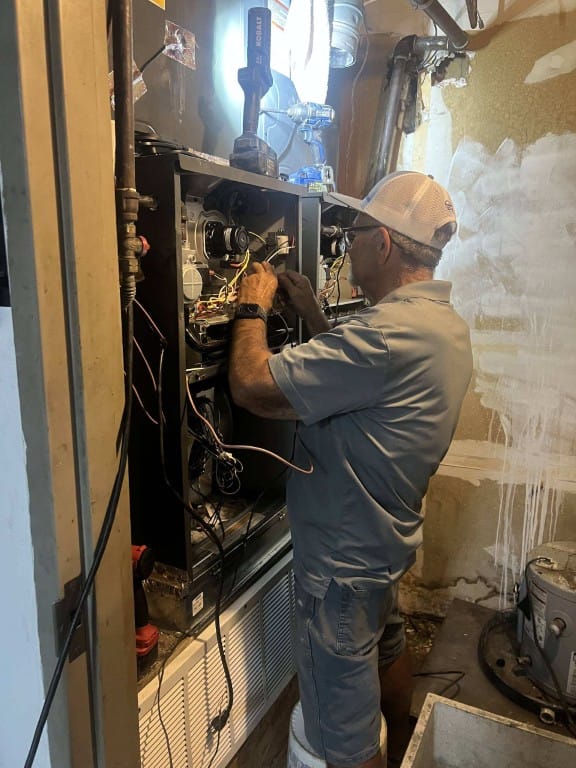
Look, not every “tune-up” is the same. Some are a quick filter swap and a sales pitch. A real furnace maintenance visit should test the parts most likely to fail on that first cold night and check the parts that affect your family’s safety.
Here’s what a thorough visit looks like and why each step matters:
| What Gets Checked | Why It Matters for an Aging Furnace | Warning Sign You Might Notice |
|---|---|---|
| Flame sensor cleaning | Dirty sensors cause short cycling and no-heat calls | Furnace starts, then shuts off in seconds |
| Igniter inspection | Cracked igniters fail on the first hard start | Clicking with no flame |
| Heat exchanger inspection | Cracks can let carbon monoxide into your home | Soot, odd smells, or a yellow flame |
| Gas pressure and burner check | Poor burning wastes fuel and stresses parts | High gas bills, uneven heat |
| Blower motor and capacitor test | Weak parts struggle on cold starts | Humming, slow startup, weak airflow |
| Condensate drain flush | Clogs trip safety switches in high-efficiency units | Water near the furnace, random shutdowns |
| Safety controls test | Limit and rollout switches keep your home safe | Frequent shutdowns or a tripped breaker |
| Filter and airflow check | Restricted airflow overheats the system | Dusty rooms, hot-smelling air |
| Thermostat calibration | Bad readings make the system run too long or too little | Rooms never match the setting |
Want to know the secret? The best technicians don’t just clean. They measure. A capacitor can look perfect and still test weak. A heat exchanger can look fine from the outside and still have a crack you’d only find with a camera or a careful inspection.
At RW Heating, Air, Plumbing & Electrical, our NATE-certified techs have been caring for DeSoto County furnaces since 1999. You can see exactly what’s included on our furnace maintenance service page.
The Safety Part Nobody Likes to Talk About
It’s a little scary, but it matters. Gas furnaces burn fuel inside your home. The heat exchanger keeps the fumes, including carbon monoxide, separate from the air you breathe.
As furnaces age, the metal heats and cools thousands of times. Over years, that can lead to cracks. You can’t see carbon monoxide, and you can’t smell it. That’s why a heat exchanger check isn’t an upsell. It’s the most important part of the visit for anyone with an older system.
Here’s what matters most: install carbon monoxide detectors near sleeping areas and on each level of your home. Test them when you change your clocks. Maintenance lowers the risk, and detectors are your backup.
Repair, Maintain, or Replace? An Honest Way to Decide
You might feel stuck here. Nobody wants to pour money into an old furnace, but nobody wants to replace one too early, either. It’s frustrating when every option feels like a gamble.
This table gives you a starting point based on age:
| Furnace Age | What Maintenance Usually Focuses On | Typical Outlook |
|---|---|---|
| 0–8 years | Cleaning, filters, drain lines, warranty compliance | Maintain yearly and expect reliable service |
| 9–14 years | Igniters, sensors, capacitors, blower motors | Repairs are usually worth it |
| 15–20 years | Heat exchanger condition, motor wear, efficiency losses | Weigh each repair against replacement |
| 20+ years | Safety checks come first | Start planning for replacement |
A simple rule many pros use: multiply the furnace’s age by the repair cost. If the number tops roughly $5,000, replacement often makes more sense. So a $300 repair on a 12-year-old furnace ($3,600) is usually worth doing. A $400 repair on a 17-year-old unit ($6,800) deserves a harder look.
The exception is safety. A cracked heat exchanger on an older furnace usually means it’s time to replace, no matter what the math says.
We’ll tell you straight when repair beats replacement. If a fix makes sense, our furnace repair team can handle it. If it doesn’t, we’ll walk you through furnace installation options and available financing with no pressure.
Your Early-Fall Test Run
Here’s a tip that doesn’t get enough attention. Don’t wait for the first cold night to find out if your furnace works.
Pick a mild day in early October. Switch your thermostat to heat and bump it up a few degrees. Let it run for 15 to 20 minutes.
A faint burning smell for the first few minutes is normal. That’s summer dust burning off. But if the smell lasts, if you hear loud banging or squealing, or if the furnace starts and stops over and over, call for service. You’ll get on the schedule before the rush, not during it.
Why does this matter so much? Because when the first cold snap hits DeSoto County, every HVAC company gets flooded with calls at once. Finding a problem two weeks early is the difference between a calm fix and a long cold night.
What You Can Safely Do Yourself
You don’t need to be handy to help your furnace. A few simple habits go a long way.
Change your filter every one to three months. Homes with pets, allergies, or lots of dust need changes on the shorter end. A clogged filter makes the furnace work harder and run hotter, which shortens the life of the whole system.
Keep the area around the furnace clear. Boxes, paint cans, and laundry piles block airflow and can be a fire risk. Make sure supply vents and return grilles in your rooms aren’t covered by rugs or furniture, either.
This doesn’t work if the problem is inside the furnace, though. Gas parts, electrical controls, and heat exchangers should be left to a licensed pro. Poking around inside a gas appliance can void your warranty and put your safety at risk.
Why One Call Beats Three Contractors
Here’s something many homeowners run into. The furnace tech finds a wiring issue. Or the condensate line is tied into the plumbing. Or the new system needs an electrical upgrade. Suddenly you’re scheduling three different companies and taking three days off work.
RW Heating, Air, Plumbing & Electrical holds all three licenses (HVAC, plumbing, and electrical) under one roof. One call. One crew. Done right. If your furnace visit turns up an issue in another trade, the same local team can take care of it.
For homeowners who’d rather not think about it at all, our Comfort Club handles yearly maintenance plan visits and priority scheduling. That means you’re first in line when the cold snap hits. You can also check our current specials before you book.
Frequently Asked Questions
How often does an older furnace need maintenance?
Once a year, ideally in September or October. Furnaces over 15 years old benefit most because their parts are closer to failing. If you have a heat pump, it runs year-round, so twice a year (spring and fall) is best. Learn more on our heating services page.
Why does my furnace work in fall but fail on the first really cold night?
Mild fall nights only ask the furnace to run in short bursts. A hard freeze makes it run longer and start more often. Weak igniters, dirty flame sensors, and tired motors that barely got by on mild days often give out under that heavier load.
Is furnace maintenance worth it on a 20-year-old furnace?
Yes, but the goal changes. On a furnace that old, maintenance is mostly about safety and planning. A good inspection tells you whether the heat exchanger is sound and how much life is left, so you can replace it on your schedule instead of in an emergency.
What happens if my furnace fails anyway?
Call a local team that offers emergency service. RW Heating, Air, Plumbing & Electrical offers 24/7 emergency help, and if you call before 10 AM, we can usually be there the same day. Reach us through our contact page or at 662-429-2590.
Sleep Easy When the Temperature Drops
Let’s bring it home. Aging furnaces tend to fail on the first cold night because small problems build up over a quiet summer. A real furnace maintenance visit catches those problems early by cleaning sensors, testing motors and igniters, clearing drain lines, and checking the heat exchanger for safety.
Do a test run in early October. Change your filter. Put CO detectors where your family sleeps. And if your furnace is 15 years or older, get an honest opinion on how much life it has left.
You don’t have to lie awake wondering if the heat will kick on. Since 1999, RW has been helping DeSoto County neighbors in Nesbit, Hernando, Olive Branch, and beyond stay warm. Schedule your furnace maintenance today, and head into winter feeling relieved, not worried.